
Phoenix old map
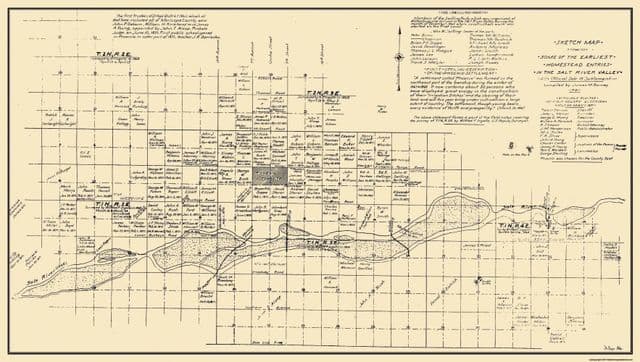
You can find on this page the Phoenix old map to print and to download in PDF. The Phoenix historical map and the vintage map of Phoenix present the past and evolutions of the city of Phoenix in Arizona - USA.
Phoenix historical map
The Phoenix old map shows evolutions of Phoenix city. This historical map of Phoenix will allow you to travel in the past and in the history of Phoenix in Arizona - USA. The Phoenix ancient map is downloadable in PDF, printable and free.
The Hohokam carried out extensive trade with nearby Anasazi, Mogollon, and other Mesoamerican tribes. Native American names for the historical city of Phoenix include Skikik (O’odham), Wasinka (Yavapai), Fiinigis (Western Apache), Hoozdoh (Navajo), and Hachpa ‘Anya Nyava (Mojave). It is believed that, between 1300 and 1450, periods of drought and severe floods led to the Hohokam tribe abandonment of the area as its mentioned in Phoenix historical map. Local Akimel O’odham settlements, thought to be the descendants of the formerly urbanized Hohokam, concentrated on the Gila River alongside those of the Tohono O’odham and Maricopa peoples. Some family groups did continue to live near the Salt River, but no large villages existed.
Phoenix vintage map
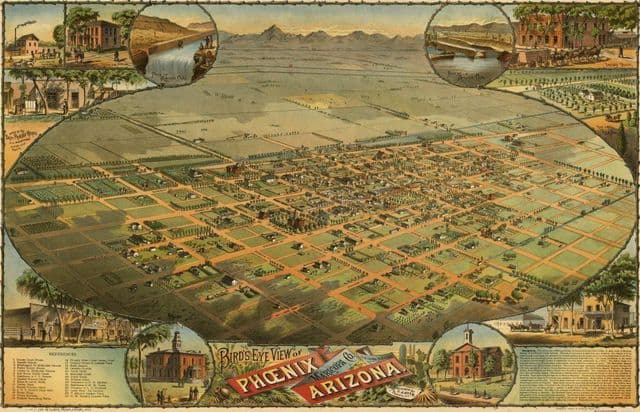
The Phoenix vintage map give a unique insight into the history and evolution of Phoenix city. This vintage map of Phoenix with its antique style will allow you to travel in the past of Phoenix in Arizona - USA. The Phoenix vintage map is downloadable in PDF, printable and free.
Lord Darrell Duppa suggested the name “Phoenix,” as it described a vintage city born from the ruins of a former civilization. The Board of Supervisors in Yavapai County, which at the time encompassed Phoenix, officially recognized the new town on May 4, 1868, and formed an election precinct. The first post office was established on June 15, 1868, with Jack Swilling serving as the postmaster as its mentioned in Phoenix vintage map. With the number of residents growing (the 1870 U.S. census reported about a total Salt River Valley population of 240), a town site needed to be selected. On October 20, 1870, the residents held a meeting to decide where to locate it. A 320-acre (1.3 km²) plot of land was purchased in what is now the downtown business section.